How to rent a car in Thailand as a visitor
Staff Writer
Rent from an established company with a staffed counter, pay the deposit with a credit card in the main driver's name, carry your International Driving Permit alongside your original home licence, buy the excess reduction, and photograph the car from every angle before you drive it away. That is the short version, and if you stop reading here you have most of what protects you.
The thing most visitors get wrong is insurance. Every registered vehicle in Thailand carries compulsory cover, called Por Ror Bor, and people assume it means the car is insured. It does not mean that. According to ThaiCoverage's guide for foreigners, updated 9 July 2026, the compulsory policy pays injured third parties and nothing else: not damage to the car you are driving, not theft of it, not your own injuries. The guide's own summary is that "compulsory insurance alone is not enough for accidents involving vehicle repairs or high property damage." Everything above that line is a commercial product the rental company sells you, and the gap between the two is where the arguments at the return counter happen.
This page covers renting a car, from a Thai rental company, as a visitor on a tourist entry. Scooters come up only where the rules differ sharply, because they do.
There are three gates. Your right to drive, your ability to fund the deposit, and the insurance tier you accept. Get all three right before you arrive at the counter and the handover takes fifteen minutes.
Your right to drive. Thailand's Ministry of Transport, in a clarification published by the Government Public Relations Department, recognises exactly three credentials for a foreigner behind the wheel: a valid Thai driving licence, a valid International Driving Permit, or a driving licence issued by an ASEAN member country. That is the whole list. An IDP is not a licence in its own right; it is an official translation of your home licence, which is why it has to be carried with the original. Show one without the other at a checkpoint and you have shown nothing.
Thailand accepts IDPs issued under the 1949 Geneva Convention, which it has recognised since 1962, and under the 1968 Vienna Convention, recognised since 2020, according to The Thaiger's IDP guide. The US, Canada, Australia, New Zealand, Japan, South Korea and Malaysia issue the Geneva format; most of Europe, plus Russia, Brazil and India, issue the Vienna format. Either is fine here. China and Taiwan are party to neither convention, so a Chinese licence plus an IDP-style document does not work and a Thai licence is the only legal route.
The deposit. Car rentals are secured against a credit card, held in the name of the person driving. The Thaiger's rental guide of 1 July 2026 describes a credit card hold or a deposit running to several hundred US dollars as the norm for cars, against cash deposits of 500 to 5,000 baht for motorbikes. A 2026 guide from Itinerary Expert puts the holds at 15,000 to 25,000 baht for an economy car, 30,000 to 50,000 baht for a mid-size, and 80,000 to 150,000 baht for a premium car, released 7 to 30 days after you hand the car back. Debit cards are rarely accepted by the major firms. We have not verified individual company policies for this page, so check the specific terms on your booking, but plan on the card having that much headroom for a month.
The insurance tier. This is the only part of the transaction where you have a real decision to make.
| Por Ror Bor (compulsory) | Standard CDW (included) | Super CDW (paid add-on) | |
|---|---|---|---|
| Damage to the car you rented (ThaiCoverage, Jul 2026; Thaiger, Jul 2026) | Not covered | Covered above the excess | Covered, excess reduced or waived |
| Injury to other people (ThaiCoverage, Jul 2026) | Medical expenses up to about 80,000 baht per person; up to about 500,000 baht for death or permanent disability | Rental firm's liability cover sits on top | Same as standard |
| Your own injuries (ThaiCoverage, Jul 2026) | Not covered | Not covered unless separately bought | Not covered unless separately bought |
| Theft of the vehicle (Thaiger, Jul 2026; ThaiCoverage, Jul 2026) | Not covered | Depends on the tier; Class 1 voluntary cover includes theft and fire | Depends on the tier; confirm in writing |
| What you pay out of pocket after a crash (Thaiger, Jul 2026) | Full repair cost of the rental car | Excess of roughly 8,000 to 15,000 baht per accident | Reduced or nil, per the contract |
| Cost to you (Thaiger, Jul 2026; Itinerary Expert, 2026) | Included in the rental, by law | Included in the headline rate | 200 to 400 baht per day direct, or about US$8 to US$12 per day through booking aggregators |
| Who it is wrong for | Nobody can decline it, and nobody should rely on it | Anyone who would struggle to lose 15,000 baht on a bad day | Anyone renting for one short, local, low-mileage trip who is comfortable carrying the excess |
Thailand's voluntary market is sold in classes 1, 2+, 3+ and 3, with Class 1 the broadest: own-vehicle damage, third-party liability, theft and fire. Class 3 is essentially third-party liability alone. When a rental contract says "full insurance", ask which class the vehicle carries and what the excess is in baht. Those two numbers are the answer; the adjective is not.
One warning that does not apply to cars but ruins more holidays than anything else on this page: if you also plan to hire a scooter, your licence and IDP need the motorcycle category. The Thaiger reports insurers including AXA and Roojai citing invalid documentation as a leading reason for refusing claims, and an IDP without a Category A endorsement does not authorise a scooter, however small the engine. Proper insurance on motorbike rentals is described as rare in the first place.
Budget about 45 minutes for the whole counter process on arrival, more at a busy airport in high season.
The same document threshold Thai authorities apply elsewhere in the driving system, including the tourist temporary licence process on thailand.go.th.
Not a photo of it. The IDP is worthless without it.
Get it at home before you fly. Geneva permits are nominally valid one year, Vienna permits up to three, per TDL Service, updated 18 May 2026. Anything sold as valid for longer than three years is flagged as a scam product.
Depending on car class. Deposit ranges from Itinerary Expert's 2026 guide; holds clear 7 to 30 days after return.
Print it or screenshot it. You will want it at the return desk.
The single cheapest piece of protection in this entire process.
1. Book before you arrive, especially between November and March. Itinerary Expert's 2026 figures put high season pricing 30% to 50% above the rest of the year, with low season discounts reaching 40%. Booking ahead also fixes the insurance tier in writing rather than leaving it to a counter upsell. You have done this right when your confirmation states the car class, the daily rate, the deposit amount and the excess figure.
2. Pick an established firm over a roadside operator, and accept that this costs more. The US Embassy in Bangkok recommends reputable, established rental companies over unverified or informal operators, and the fraud complaints in the sources cluster overwhelmingly around the informal end. This is also the honest answer to the airport-versus-town question: we have not price-tested airport counters against downtown branches in Bangkok, Chiang Mai or Phuket, and none of the sources used here carries airport-specific rates. What the evidence does support is that the operators generating embassy warnings and police raids are the shopfront and beachfront ones, not the airport desks.
3. Check the driver age rules against your booking. Standard hire generally opens at 21 to 23 with at least a year of driving experience, and premium cars at 25 with two to three years, according to Itinerary Expert's 2026 guide. Drivers under 25 can expect a young driver surcharge of 200 to 500 baht per day. If you are 22 and booked a mid-size SUV, find that out now rather than at the counter.
4. At the counter, read the deposit line and the fuel policy before you sign. You want to know the exact hold amount, when it is released, and whether the car is full-to-full. Ask the agent to note the current fuel level on the contract. If the contract is in Thai only, do not sign it: ThaiCoverage's guide explicitly warns foreigners not to sign Thai-language documents they do not understand.
5. Photograph the car before you move it. The US Embassy's advice is photos and videos from all angles, taken before you rent. Do the four corners, each wheel and its rim, the windscreen, both bumpers, the roof, the underside of the front lip if you can reach it, and the interior including the seats and the dashboard. Then shoot a slow walk-around video with the counter or the branch signage visible so the location and time are not arguable. Five minutes.
6. Shoot the odometer and the fuel gauge with the ignition on. One clear photo. This is the evidence that kills a fabricated fuel charge at return, which the Thaiger lists as one of the standard tactics.
7. Mark every existing scratch on the damage sheet, including ones already printed on it. Then photograph the completed sheet with the agent's signature or stamp visible. If the agent will not mark something you can see, photograph the panel and the sheet together and say out loud that it is not recorded.
8. Check the basics work before you leave the lot. Lights, indicators, wipers, horn, air conditioning, tyre condition, and that the spare and jack are present. Renting out vehicles with known mechanical faults appears on the Thaiger's list of operator tactics, and a fault you drive away with becomes a fault you argue about later.
9. Drive with the passport in your own pocket. Never as a deposit. More on why in the next section.
10. Return the car in daylight, with an agent present, and repeat the photo set. Same angles, plus the odometer and the fuel gauge. Get written confirmation that the car was accepted without new damage, and keep it until the credit card hold has actually dropped off your statement, which can be up to 30 days.
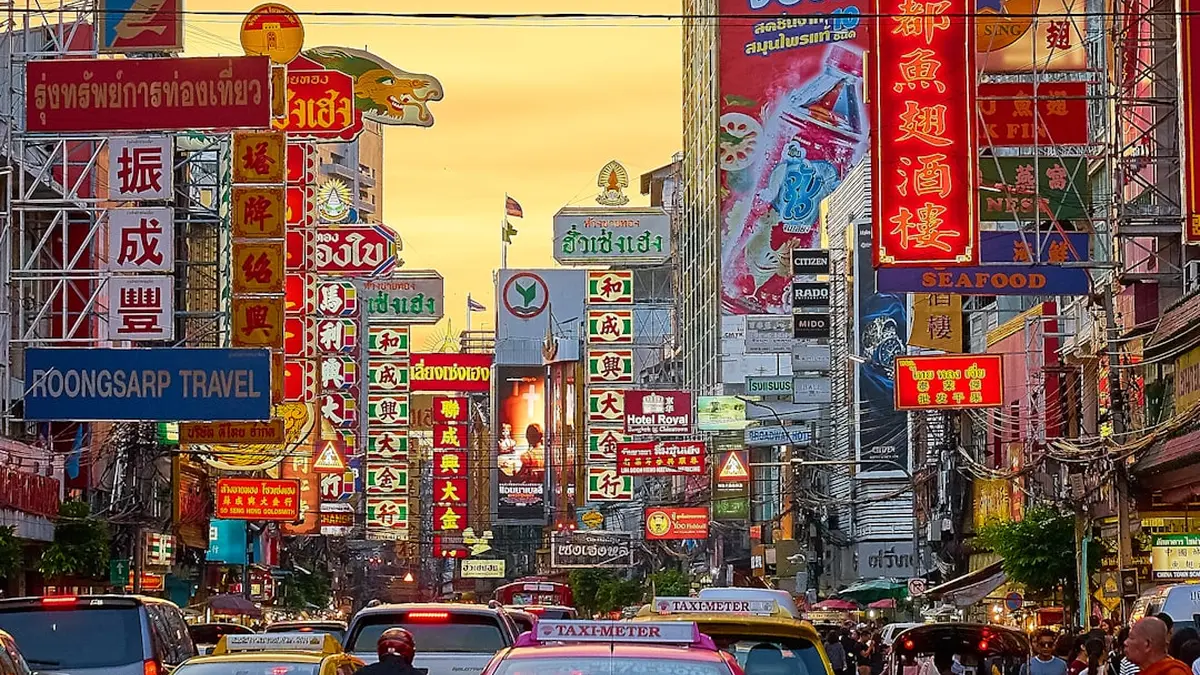
These are not hypothetical. A Mastercard Economics Institute study reported by The Thaiger found that taxi and car rental disputes account for 48% of all reported tourist fraud cases in Bangkok, the largest single category in the city, with travel-related fraud rising by up to 28% during peak travel seasons.
The passport deposit. The operator asks to hold your passport as security instead of, or as well as, a cash deposit. At return they claim damage and will not hand the passport back until an inflated repair fee is paid, sometimes even when you bought their insurance. The US Embassy names this as a recurring risk, concentrated in Phuket and Pattaya, and its advice is blunt: do not leave an original passport, offer a photocopy. This is not a fringe practice. When Thai police raided the largest rental network on Koh Phangan in October 2025, after a four-month investigation triggered by tourist complaints, Khaosod English reported that investigators found 87 customer passports being held by the business and seized roughly 400 motorcycles and cars. How to recognise it: any request for the original passport as collateral. What to do: walk away and rent elsewhere. If your passport is already held, call the Tourist Police on 1155.
Pre-existing damage blamed on you. At return, the agent points at a scuff and produces a repair quote. This works only when there is no timestamped evidence of the car's condition at pickup, which is the entire reason for step 5 above. How to recognise it: damage you are shown for the first time at return, on a panel you did not photograph. What to do: produce your pickup photos and the signed damage sheet on the spot, calmly. If the quote is being pushed while a second person hovers nearby, that is a known intimidation pattern in the Thaiger's account, and it is the point to stop negotiating and call 1155.
The fuel claim. The operator asserts you returned the car with less fuel than you took, and charges a refuelling fee at a rate nobody would pay at a pump. Your ignition-on photo of the gauge at pickup, and a receipt from the station where you filled up before return, ends this in one move.
The duplicate key. Specific to scooters, but worth knowing because visitors often rent both. The operator keeps a spare key, moves the parked bike, then charges a recovery or replacement fee. There is no car equivalent in the sources, but the same operators run both fleets.
Fake or inflated fines. The brief for this page asked about fabricated traffic fines, and we could not substantiate a documented pattern of rental firms inventing them from the sources available. What is documented is the real fine schedule, which is worth knowing precisely so that an invented figure stands out. As of the Thaiger's 2026 reporting, riding without a helmet is 2,000 baht, driving without a valid licence 1,000 baht, and failing to produce a licence 2,000 baht. Increases that took effect in June 2025 set no seatbelt at 2,000 baht and mobile phone use while driving at 4,000 baht. Documentation violations generally run 500 to 2,000 baht.
You are staying longer than two or three months. The Motor Vehicle Act B.E. 2522 (1979) permits foreigners without immigrant visas to drive on a valid IDP, but the practical limit is contested. TDL Service, updated 18 May 2026, describes Thailand applying roughly 90 days per entry regardless of what the permit itself says. A Pattaya rental operator's February 2026 guide attributes a 60 consecutive day limit to the Department of Land Transport, and The Thaiger notes some rental firms and insurers enforcing the stricter 60-day cutoff even where the legal position is looser. We could not confirm the 60-day figure on the DLT's own English-language pages. Treat it as unsettled, assume your insurer will take the strictest reading, and if you are staying past two months, start the Thai licence process. Note also that a late-2025 crackdown narrowed visa-exempt entries to about two per year, which closed the loophole people used to reset the clock indefinitely.
You want a temporary Thai licence instead. Tourists can get one, valid 30 days, through the Provincial Land Transport Office in the province where they entered. The Royal Thai Government portal lists the requirements: passport with six months' validity, an address certificate from your tour operator, a medical certificate issued within the past month confirming no chronic or mental conditions affecting driving, and your foreign licence in the same category with an official Thai translation. The process includes a physical fitness evaluation and a one-hour training session. Fees are 205 baht for issuance plus 100 baht for the photo and card. That page was published in May 2023 and updated in August 2023, and remains the standing government reference. The DLT's Bangkok line is +66 2271 8888.
The licence rules may be tightening. In June 2025 The Nation reported a draft DLT regulation under which an IDP would no longer serve as proof for obtaining a temporary Thai licence, and foreign licence holders would have to sit a written test. The same draft proposed extending standard licence validity from two years to five. It was still in public consultation at that point with no effective date. By 2026 some operators describe a written test for foreigners as already in force, with a roughly 50-question multiple-choice paper and a pass mark variously reported as 70% or 90%. Those accounts conflict and neither is an official source. Verify with the DLT before you rely on any of it.
You are bringing your own foreign-registered car across a land border. Different system entirely. The DLT's Foreign Vehicle Permit portal states that every traveller using a privately owned foreign-registered vehicle in Thailand must apply for a temporary permit through a licensed Thai travel agency, at least five working days before the vehicle enters. Permits run 30 days per trip against a 60-day annual quota per vehicle. Fees are a 500 baht application charge plus 200 baht issuance for motorcycles or 500 baht for cars and pick-ups, plus 5 baht administrative fee. Third-party liability must be at least 1,000,000 baht per person for injury and 1,000,000 baht per accident for property damage. Groups of one to five vehicles need a guide and a Thai-registered escort vehicle. Camper vans, motorhomes, buses and trucks are not eligible. If that sounds like more friction than a holiday can absorb, that is the correct reading.
You are driving in Phuket, Pattaya or Chiang Mai's old city. Enforcement is not uniform. The Thaiger describes Phuket, specifically Patong, Karon and Kata, as running the most systematic checkpoints for licence and IDP checks, with Pattaya and Chiang Mai's old city also frequent, and Bangkok and rural areas lighter. The fine is minor compared with the real risk, which is an insurer refusing a claim on the grounds of invalid documentation.
A mandatory tourist insurance layer is under discussion. On 26 August 2026 The Nation reported a proposed 450 baht fee on foreign visitors funding a three-tier accident and medical insurance scheme, in which Tier 3 would require tourists renting cars, motorcycles or jet skis to buy mandatory third-party liability cover for harm they cause to others. A public consultation of at least 30 days was under way at publication. Former tourism minister Weerasak Kowsurat estimated the scheme could raise close to 10 billion baht a year. Nothing here is in force, and the rental process described on this page is unaffected until it is.
Run the arithmetic once and the excess decision makes itself. On a seven-day rental, Super CDW at 400 baht a day costs 2,800 baht. The excess it removes is 8,000 to 15,000 baht per accident. You are buying out a four to five times larger downside for the price of two days of the car. For a week or more, take it. For a single day of local driving where you would absorb 15,000 baht without it spoiling the trip, skipping it is defensible.
Season moves the headline rate more than anything else you control. High season, November to March, adds 30% to 50%; low season discounts reach 40%. Length helps too: Itinerary Expert's 2026 figures show 10% to 15% off at four to seven days, 20% to 30% at eight to 30 days, and up to 50% beyond a month. If your itinerary is flexible by a week either side of a school holiday, that is where the money is.
What we could not price here: fuel and expressway tolls. None of the sources used for this page carries a current pump price or toll schedule, so there is no figure to give you, and inventing one would be worse than the gap. The same applies to airport-specific rates at Suvarnabhumi, Chiang Mai and Phuket, and to the published terms of individual firms, which we did not test. Where a number below is from a rental operator's own blog or a travel guide rather than a government page, we have said so, and those carry less weight than the DLT and embassy sources.
One more figure worth holding in your head, from the compulsory side: ThaiCoverage's July 2026 guide puts Por Ror Bor's preliminary injury compensation at about 30,000 baht per person, medical expenses up to about 80,000 baht per person, death or permanent disability up to about 500,000 baht per person, a hospitalisation allowance of 200 baht a day capped at 20 days, and a total ceiling of roughly 20,000,000 baht per accident. Those are real protections for people you might injure. None of them is money for your car, your medical bill, or your flight home.
Comments
No comments yet. Be the first to comment!
Leave a Comment