Does Travel Insurance Cover Scooter Accidents in Thailand?
Contributing Writer
Usually not. A travel policy pays for a scooter crash in Thailand only if you meet all five of its conditions: you hold a full motorcycle license at home, you carry an International Driving Permit that shows the motorcycle class, the bike is within the policy's engine size cap, you wore a helmet, and you had not been drinking. Miss any one and the claim is normally refused, even when the other driver caused the crash.
This matters the moment you pick up a rental bike. According to a Chiang Mai expat insurance specialist writing in September 2026, a broken leg needing surgery costs $15,000 to $35,000, and a serious head injury with ICU care costs $50,000 to $150,000 or more. The compulsory insurance on the bike covers only a small part of that.
Your policy does not ask whether the crash was your fault. It asks whether you were riding within its terms, and it checks those terms in roughly this order.
The license comes first. Insurance Thailand names a missing motorcycle license as the most common reason for refusal on every plan it sells, and every plan it reviewed says a car license is not enough. That applies to a small 125cc scooter too.
The permit has to match. An IDP only repeats the classes already on your home license, as Expat Insurance explains. A car-only license produces a car-only IDP, which gives you no right to ride. The US Embassy in Bangkok says you need the IDP as well as your home license, that you must get it before you leave home because Thailand does not issue one to visitors, and that a missing or wrong-class permit can void your cover even when you were not at fault. We could not load the embassy page directly. This summary relies on its guidance as widely quoted, not on a live copy of the page.
Then the engine. Thai law does not care about engine size: either you are licensed to ride or you are not. Insurers do care. Engine caps of 125cc are common, and some policies cap at 250cc. Rental scooters start at 125cc, and 150 to 160cc bikes are increasingly common on hilly islands, according to a 2026 comparison of ten policies by The Restless Beans. A 160cc bike on a 125cc policy is a refused claim.
Last, how you rode. Policies require a helmet on the rider, and often on the passenger. They also require a blood alcohol level under Thailand's legal limit of 0.05%, which is lower than the US or UK limit.
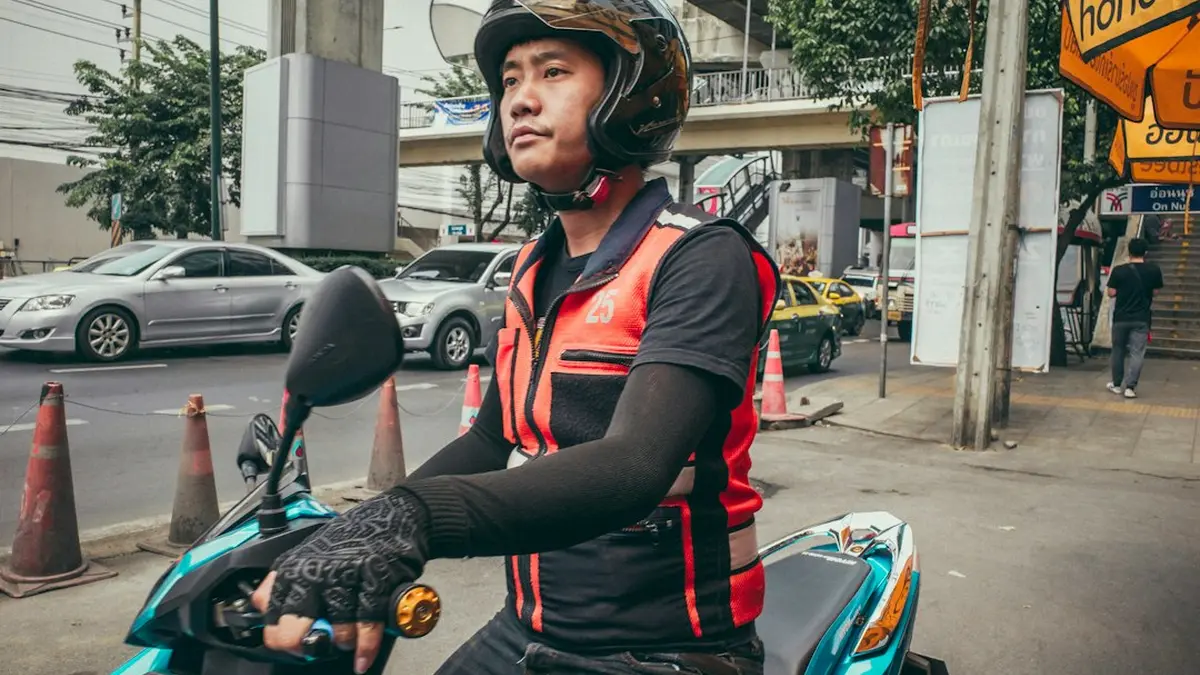
A car-license holder on a Honda Click. This is the most common case. The Click and the Yamaha Mio are standard rentals in tourist areas, and a car-only license voids motorbike cover on nearly every policy. There is one exception. Genki Traveler covers unlicensed riders of light motorcycles (125cc or less, no more than 11kW, top speed no more than 110 km/h), but only if the rider wore a helmet. It does not cover damage to the bike or to property, and it does not cover medical costs for anyone else who was hurt.
A fully licensed rider on a 160cc island bike. The license is fine, but the engine may not be. World Nomads, the most expensive of the ten policies compared (€1,294 for six months in 2026), caps engines at 125cc through an add-on. Hey Mondo, IATI and CoverForYou list no engine limit for fully licensed riders.
A licensed, helmeted rider after two beers. Alcohol voids the claim on every policy in the sources. According to The Thaiger, 35% of solo crashes in Thailand are linked to alcohol.
Every registered bike carries Por Ror Bor, Thailand's compulsory motor insurance. It covers the bike, not you, and riders on forums report that it pays out whoever was riding, licensed or not. The problem is how little it pays.
| Por Ror Bor (on the bike) | Travel insurance (on you) | |
|---|---|---|
| Who it follows | The motorcycle | You, the policyholder |
| Your injuries if you caused the crash | 30,000 baht preliminary payment | Up to the policy's medical limit, if you met its terms |
| Injury to other people | Up to 80,000 baht per person | Only if the policy includes liability |
| Death or permanent disability | Up to 500,000 baht per person (35,000 baht preliminary for an at-fault rider) | Depends on the policy |
| Damage to the bike or property | Not covered | Usually excluded |
| License required | Riders report it pays regardless | Yes, except narrow exceptions |
Forum members also report that a claim needs a police accident report, so get one at the scene. Damage to the bike itself is a matter between you and the rental shop, and neither kind of insurance above will pay for it.
If you have no motorcycle license, the honest options are a Genki-style policy and a bike of 125cc or less, or four wheels instead: you can rent a car instead on a standard license and IDP. If you do hold a motorcycle license, read the policy's wording before you choose the bike, not after.
Look for the words 'full' or 'unrestricted' license. A UK license restricted to A1 or A2, or a CBT alone, may not qualify.
Get it at home before you fly. You cannot get one once you are in Thailand.
Check the cc printed on the rental agreement. If the cap is 125cc, do not take the 160cc bike.
Some policies exclude multi-day rides such as a loop through the hills.
Stay well under 0.05% blood alcohol, which in practice means not drinking at all.
Since September 2026 police fines have been higher: up to 2,000 baht for no helmet, and up to 1,000 baht plus up to one month in jail for not carrying a license.
One limit on all of this: none of the sources publishes refusal rates by insurer, so the exact wording of your own policy is the only reliable answer. If a clause is unclear, email the insurer before you travel and keep the reply.
Comments
No comments yet. Be the first to comment!
Leave a Comment